







Welcome to The World Skills Conference on Universal Data Analytics and Sciences
Original contributions from researchers describing their
original, unpublished, research contribution which is not
currently under review by another conference or journal and
addressing state-of-the-art research are invited to share
their work in all areas of Information and Communication
Technologies and its applications in field field for
engineering and management but not limited to the conference
tracks.
This conference is the flagship conference of IEEE Computer Society Chapter & IEEE Madhya Pradesh Section and organized & hosted by Symbiosis University of Applied sciences, Indore.
About IEEE Madhya Pradesh
Madhya Pradesh is situated at the heart of India.Madhya Pradesh was created in 1950 from the former British Central Provinces and Berar and the princely states of Makrai and Chhattisgarh, with Nagpur as the capital of the state.
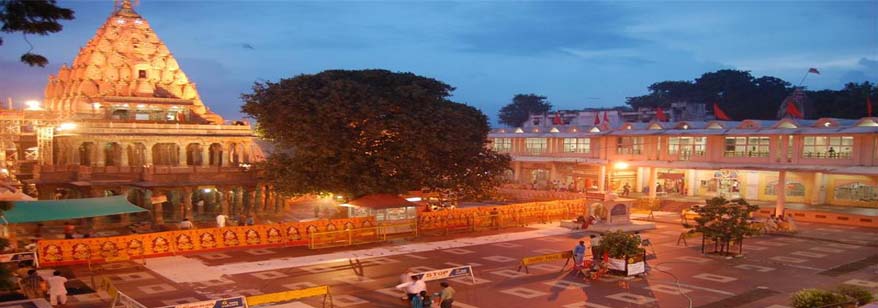
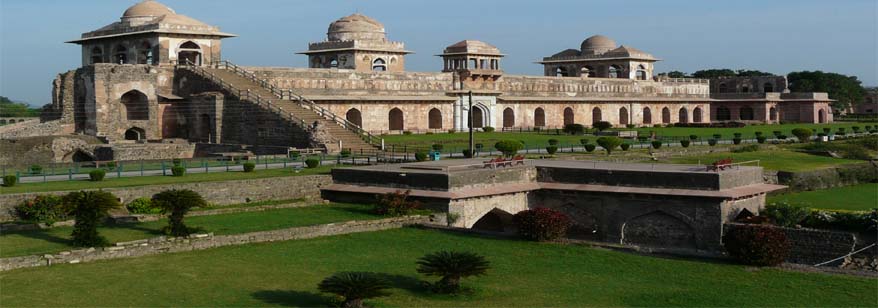
The new states of Madhya Bharat, Vindhya Pradesh, and Bhopal were formed out of the Central India Agency. In 1956, the states of Madhya Bharat, Vindhya Pradesh, and Bhopal were merged into Madhya Pradesh, and the Marathi-speaking southern region Vidarbha, which included Nagpur, was ceded to Bombay state. Madhya Pradesh is endowed with rich and diverse forest resources. Lying between lat. 21°04’N and long. 74°02′ and 82°49′ E, it is a reservoir of biodiversity. The geographical area of the state is 308,144 km2 (118,975 sq mi) which constitutes 9.38% of the land area of the country Pachmarhi, Mandav, Sanchi, Rajwada of Indore, Mahakal temple of Ujjain, Omkareshwar etc are the best historical places of Indore. The great singer Kishore kumar was born in Khandwa of Madya Pradesh.
About Indore
Indore is a city in west-central India. It’s known for the 7-story Rajwada Palace and the Lal Baag Palace, which date back to Indore’s 19th-century Holkar dynasty. The Holkar rulers are honored by a cluster of tombs and cenotaphs at Chhatri Baag. The night market Sarafa Bazar sells street food. East is the Indo-Gothic Gandhi Hall and clock tower. The Jain temple Kanch Mandir has a mirrored mosaic interior.
Conference Tracks
Track 1: SKILL for Infrastructure and
Computation
Big Data and Data Mining, Data Fusion
BIoT programming toolkits and frameworks
Green communication systems and network
IoT prototypes and evaluation test-beds
Spatial and temporal reasoning for IoT
Ubiquitous computing, Ambient Intelligence
Sensor Networks and Embedded System
Network and information security, Wireless and optical
networks
Identity Management and Object Recognition
Security, Trust, and Privacy, Routing and Control Protocols
Scalability, Reliability, Usability, and Robustness
Broadband wireless access, Mobile backhaul for small cells
Multiple antenna techniques, Cognitive radio and networks
Track 2: SKILLS for Engineering Applications
Collaboration Technologies and Systems
Embedded Systems, Natural Language Processing
Environmental Computing, Agricultural Engineering for SKILL development
Applications
SKILL Applications for Electrical and Intelligent Engineering
Digital Design and Manufacturing Technology
Numerical & Symbolic Computation
Mechanical Drawing & Computer Graphics
Gender Issues, Geo Information, GIS, Green Computing,
Multimedia
Civil and Architectural Engineering
SKILL for Engineering Structure, Architectural Economics
Human Computer Interaction
Robotics, Information Technology for People with Special
Needs
Nano Technology Software Tools, SKILL for fluid
Dynamics
Track 3: SKILL for e-Governance and
Government
SKILL for Society, Technology for Governance
E-government applications
E-governance: Economics and Development
Best practices & Technologies in SKILL Development
Virtualization & Cloud Computing for Government
Leadership for E-government using SKILL
Mobile Governance SKILL, SKILL Standards for effective
Communication strategies
Change Management for SKILL, Policy Frameworks SKILL
Reforms & Acts in SKILL Development
Legal framework for e-Governance to implement SKILL
Applications
e-Agriculture and its applications for SKILL Development
E-governance & Policy for SKILL development, Inter-governmental issues for
SKILL development
Strategies for SKILL development in Govenment, Best Practices in E-government
Track 4: SKILL development for Mathematical Sciences
Engineering trends in mathematical sciences
Mathematical logic, algebra & categories in computer science
Mathematics of information- Theoretic Cryptography
Mathematical approaches for traffic flow management
Numerical analysis and computational mathematics
Mathematical modeling and computational techniques
Computational methods for linear and nonlinear optimizations
Fourier analysis and image processing
Application of Laplace transformation to control system
Applications of Fuzzy metric spaces
Track 5: SKILL development for Healthcare Sciences
E-Prescription
Electronic Patient Record
Drug designing
Drug Selection
Drug-dose safety
Pharmacists Role in Patient Safety
Use of Robots and Automation in Pharmacy
Track 6: SKILL development for Computational Chemistry
Track 7: SKILL development for Mechatronics
Automation and Robotics Engineering
Biomedical Instrumentation and Health care Services
Cyber Physical Systems and Smart Industrial IoT
Mobile and Vehicular Communication
VLSI and Nano Technology
Track 8: SKILL development for Management
Banking Finance Services and Insurance Management
Retail Marketing Management
Supply Chain Management
Marketing Management
Operational Management
Track 9: The Role of SKILL development in Agri-Business.